
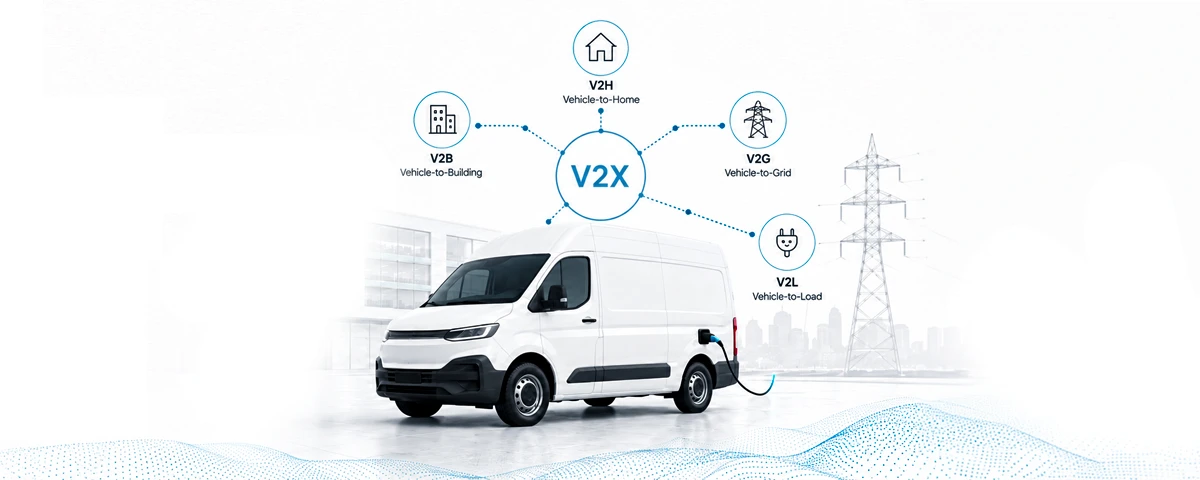
As electric vehicle adoption accelerates, vehicle-to-everything (V2X) technology is quickly moving from pilot programs into real-world deployment. Industry analysts increasingly see 2025 as a major turning point for bidirectional energy systems that allow EVs to communicate with homes, buildings, utilities, and the grid itself.
For fleet operators, utilities, and energy infrastructure providers, this shift could fundamentally change how energy is stored, distributed, and managed.
What Is V2X?
Vehicle-to-everything refers to a group of technologies that enable electric vehicles to exchange power and data with external systems.
This includes:
- Vehicle-to-Grid (V2G)
- Vehicle-to-Home (V2H)
- Vehicle-to-Building (V2B)
- Vehicle-to-Load (V2L)
In practical terms, EVs can act as mobile batteries — storing energy during low-demand periods and supplying power back when demand increases.
Why 2025 Matters
Recent industry reporting suggests momentum is building quickly. Many newer EV platforms now support vehicle-to-load functionality, while utilities and infrastructure providers continue expanding pilot programs focused on bidirectional charging and distributed energy resilience.
Several factors are driving adoption:
- Increased EV penetration
- Grid modernization initiatives
- Rising demand for energy resilience
- Growth in renewable energy integration
- Improved charging infrastructure
As these systems mature, V2X may become an important component of future smart-grid strategies.
The Infrastructure Challenge
Despite rapid progress, large-scale implementation still faces hurdles.
Industry experts continue to point to challenges involving:
- interoperability standards
- utility coordination
- regulatory frameworks
- charging infrastructure costs
- cybersecurity and data management
Widespread adoption will likely depend on greater alignment between automotive manufacturers, utilities, charging providers, and software platforms.
What This Means for the Future of Mobility
For companies operating in connected mobility, energy management, or charging infrastructure, V2X represents more than a technical upgrade — it signals a broader shift toward intelligent, decentralized energy ecosystems.
As EVs become increasingly connected assets, the ability to manage communication, power flow, and operational data in real time will become increasingly valuable.
Source & Further Reading
This article was inspired by reporting from pv magazine USA.
“Vehicle-to-everything making strong progress in 2025” by Anne Fischer, published March 27, 2025.